Norse Mythology: Unraveling the Mystical Threads of the North
Long before the age of smartphones and streaming services, the people of Scandinavia sat around fire-lit longhouses and told stories that still send a shiver down the spine. Norse mythology is not a dusty relic of a forgotten age — it is a living, breathing tradition of cosmic drama, moral complexity, and raw human truth, forged in the ice and iron of the North. From the one-eyed Allfather who sacrificed himself to gain wisdom, to the serpent coiled around the roots of the world tree, these myths speak to something deep in the human spirit. And today, more than ever, they resonate.
- The Allfather and the Aesir
- Thor, Freya, and the Vanir
- Loki: The Trickster Who Broke the World
- Yggdrasil and the Nine Realms
- The Norns and the Web of Fate
- Ragnarok: The Twilight of the Gods
- How Mythology Shaped Viking Culture
- Why Norse Mythology Still Resonates Today
- FAQ
The Allfather and the Aesir: Odin and the Gods of War and Wisdom
At the centre of the Norse pantheon stands Odin — the Allfather, the Wanderer, the Lord of the Gallows. He is not a comfortable god. He is not a god of easy blessings and answered prayers. Odin is a seeker, driven by an insatiable hunger for knowledge that cost him his right eye, which he willingly surrendered to drink from Mimir’s Well of Wisdom. He hung for nine days and nine nights on Yggdrasil, the World Tree, pierced by his own spear, to gain the secrets of the runes — the oldest magic in the cosmos.
Odin rules Asgard alongside the Aesir, a divine family that includes some of the most recognisable figures in world mythology. His wife, Frigg, holds knowledge of all fates but rarely speaks of what she knows. His sons — noble Baldr, blind Hodr, fierce Tyr — each embody different facets of the warrior aristocracy that the Norse admired. Odin himself rides the eight-legged horse Sleipnir, carries the spear Gungnir, and sends his ravens Huginn (Thought) and Muninn (Memory) across the worlds each day to bring him news of everything that lives and breathes. He is patron of warriors, poets, and the dead — the Einherjar, the chosen slain, who feast in his great hall of Valhalla, preparing for the final battle at the end of time.
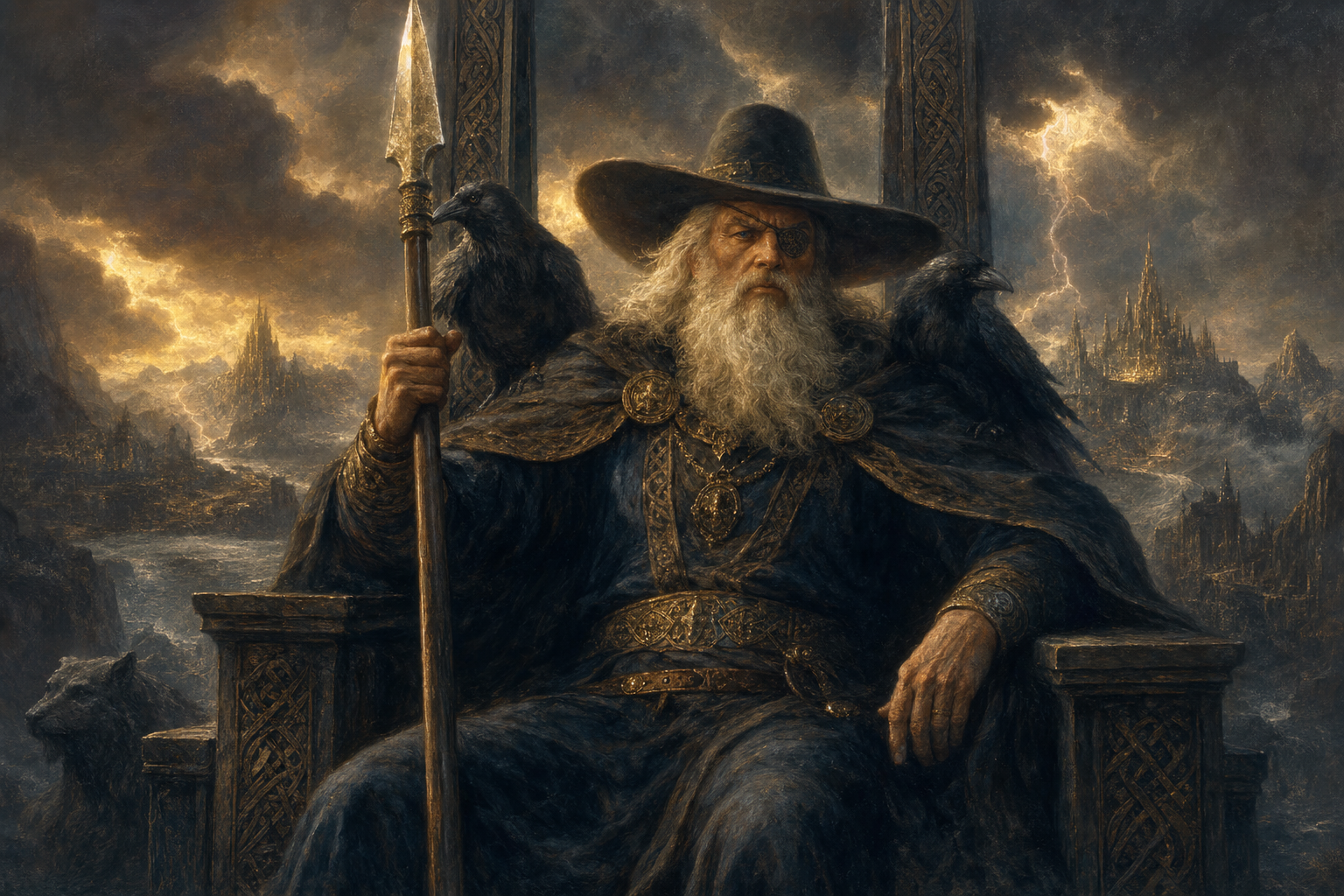
The Aesir were not merely deities of sky and storm. They were complex, flawed, mortal in their own way — bound by fate, capable of grief, capable of failure. That is precisely what makes them so compelling. These are gods who care, who bleed, who scheme and mourn and love.
Thor, Freya, and the Vanir: Power, Love, and Magic
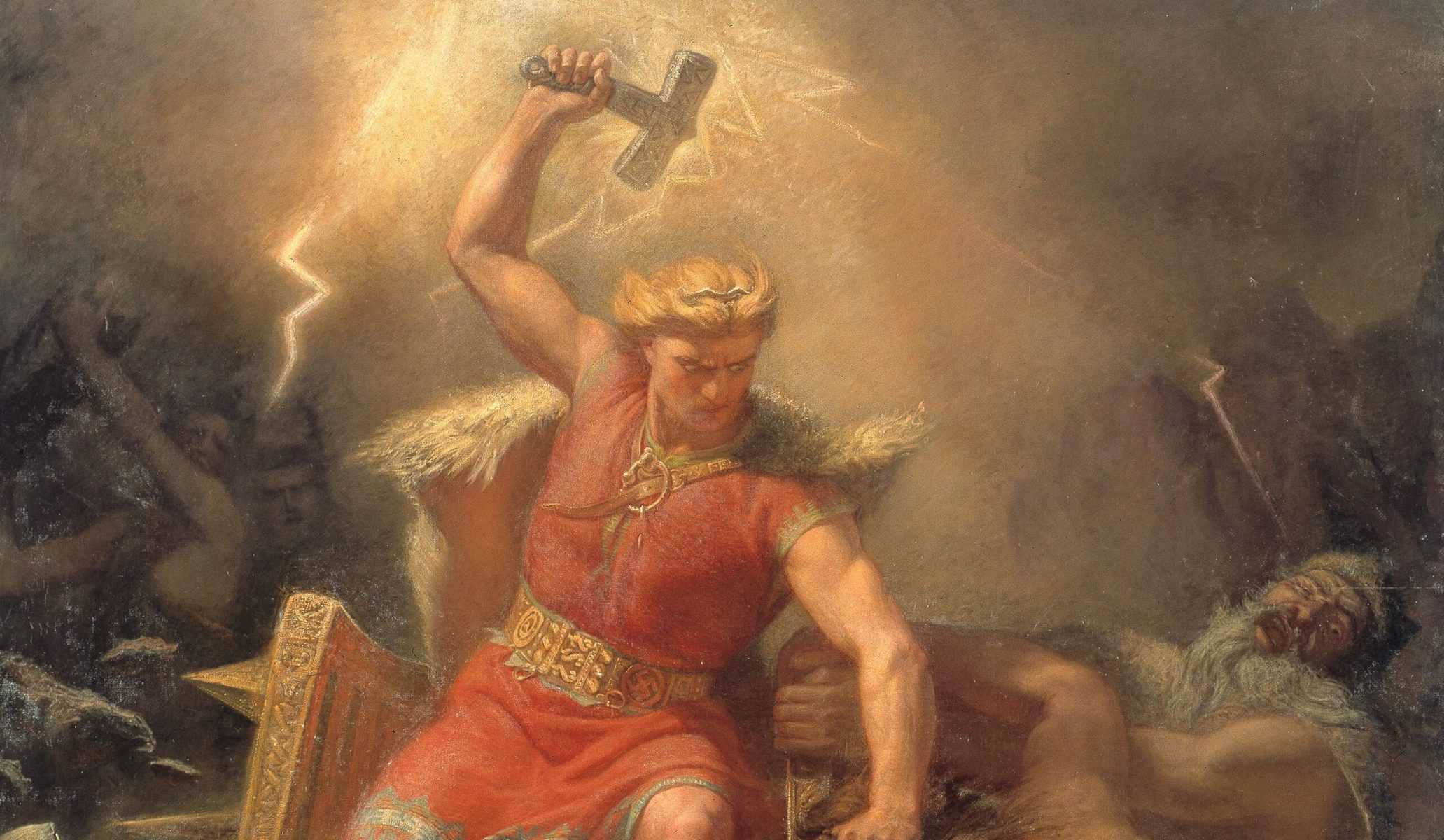
If Odin is the mind of the Norse world, Thor is its muscle. The son of Odin and the earth goddess Jord, Thor wields Mjolnir — the hammer that cannot miss its mark, that returns to his hand after every throw, and that was so sacred to the Norse that its symbol became one of the most worn amulets in Viking history. Thor is the protector of mankind, the god of thunder and storms, the enemy of the frost giants who eternally threaten the ordered world. He is red-bearded, immensely strong, sometimes hot-headed — and absolutely devoted to the defence of gods and humans alike.
The Vanir are a second family of Norse gods, older and wilder than the Aesir, associated with fertility, nature, and seidr magic. Their greatest representatives are Freya and her brother Freyr. Freya — goddess of love, fertility, war, and seidr — is in many ways the most powerful deity in the Norse cosmos. She chooses half of all warriors slain in battle, she weeps tears of gold for her missing husband Odr, and she owns the cloak of falcon feathers that can transform the wearer into a bird.
Today, many people feel a deep connection to these divine archetypes, and express it through Viking pendants bearing the symbols of Thor’s hammer, Odin’s ravens, or Freya’s cats — worn as a daily reminder of the values these gods embody.
Loki: The Trickster Who Broke the World
No figure in Norse mythology is more fascinating — or more troubling — than Loki. He is not simply a villain. He is the gods’ blood brother, their companion, their problem-solver. It was Loki who talked his way out of disaster and Loki who caused the disaster in the first place. He is cunning, shape-shifting, and strangely sympathetic. He is the father of the World Serpent Jormungandr, the great wolf Fenrir, and the ruler of the dead, Hel.
Loki’s ultimate betrayal comes with the death of Baldr — the most beloved of the gods, whose death was so perfectly engineered by Loki that not even Odin’s wisdom could prevent it. After this, Loki was bound beneath the earth, a serpent dripping venom onto his face. He will lie there until Ragnarok.
Loki represents a truth that the Norse understood deeply: chaos is not separate from the divine. It is woven into it. Without Loki’s chaos, there would be no growth, no change, no story worth telling.
Yggdrasil and the Nine Realms: The Cosmic Architecture of Norse Myth
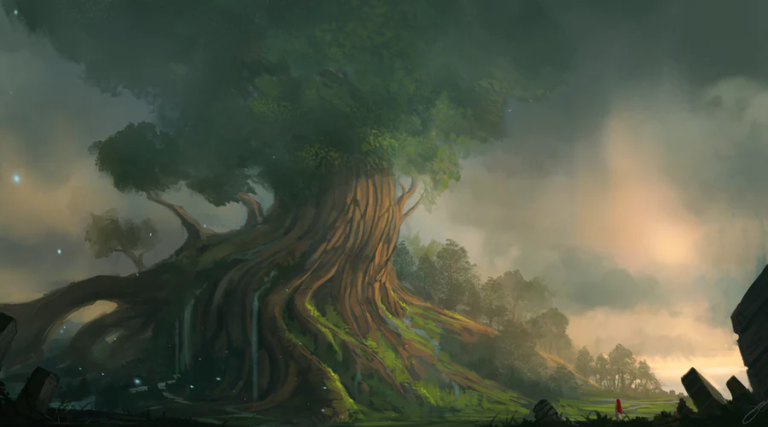
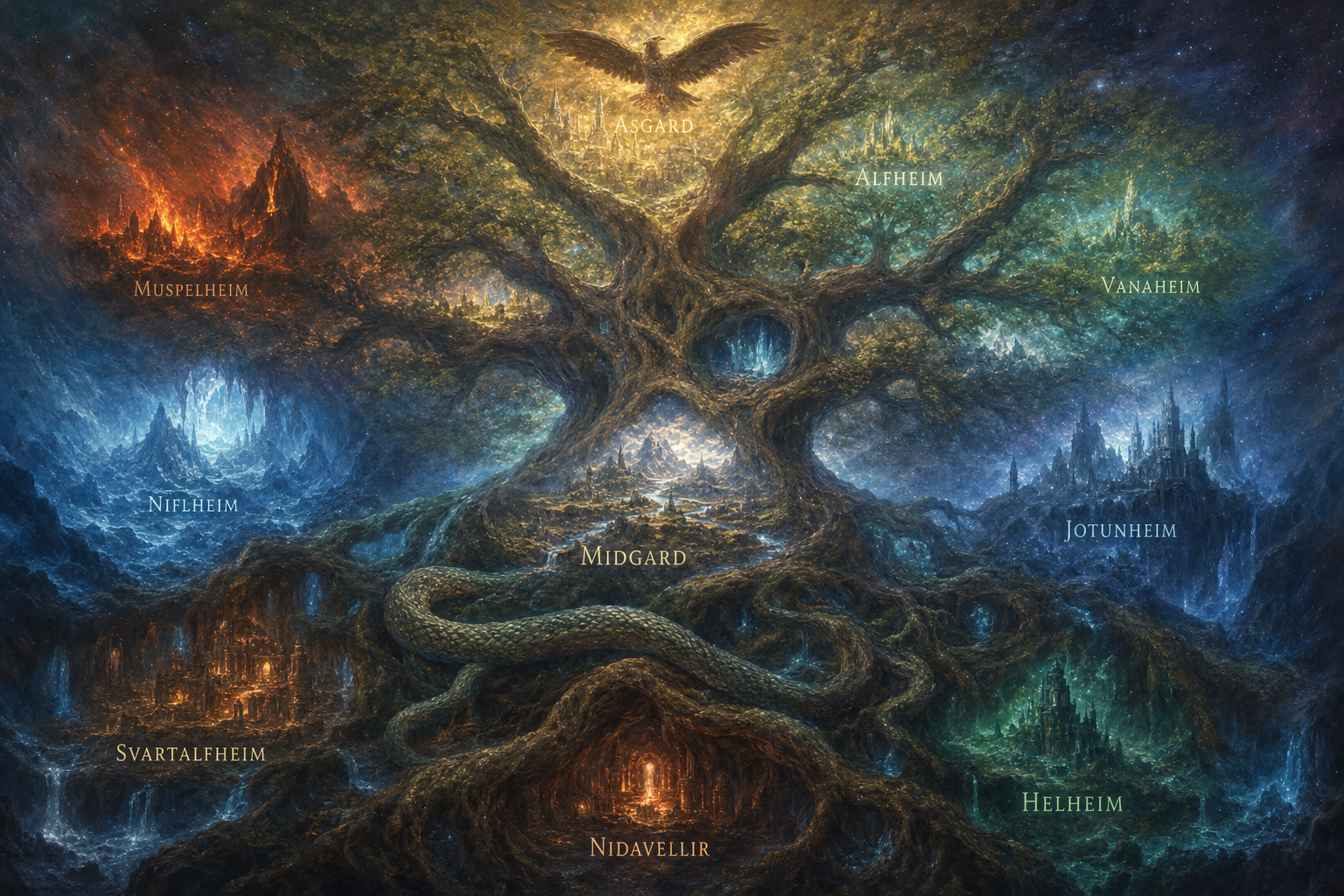
At the centre of Norse cosmology stands Yggdrasil — the immense ash tree whose roots and branches connect all existence. Its three roots reach down to the Well of Urd (where the Norns weave fate), Mimir’s Well of Wisdom, and the realm of Niflheim. Clinging to its branches are the Nine Realms:
- Asgard — realm of the Aesir gods, connected to Midgard by the rainbow bridge Bifrost
- Midgard — the world of humans
- Jotunheim — the land of the giants
- Vanaheim — home of the Vanir gods
- Alfheim — realm of the light elves
- Svartalfheim — realm of the dwarves, master craftsmen of the gods
- Niflheim — the primordial realm of ice and cold
- Muspelheim — the primordial realm of fire
- Helheim — the realm of the dead, ruled by Hel
The Norns and the Web of Fate
Beneath Yggdrasil, at the Well of Urd, sit three women who hold power greater than any god: the Norns. Urd (What Was), Verdandi (What Is), and Skuld (What Shall Be) weave the threads of fate for every living creature — mortal and divine alike. Even Odin cannot escape what the Norns have decreed. The Norse called this concept wyrd — the active, accumulated consequence of everything that has been.
This is a profound and distinctly Norse idea: the gods are not omnipotent. They are heroic precisely because they fight on even knowing they will lose. Odin knows the outcome of Ragnarok. He gathers his warriors anyway. There is something deeply honourable — and deeply human — in that.
Ragnarok: The Twilight of the Gods
Ragnarok — the Doom of the Gods — is the great ending that hangs over Norse mythology like a sword. It is the moment when Loki breaks free, when Fenrir swallows Odin, when Thor and Jormungandr destroy each other, when Surtr sets the world on fire. The gods do not win Ragnarok. They fall, one by one, in the battles they were always destined to fight.
And yet, Ragnarok is not simply an apocalypse. From the sea, the world rises again. Survivors emerge. The fields grow without being sown. Baldr returns from Hel. Ragnarok is simultaneously an ending and a beginning — the Norse conception of cyclical time. The courage to face an inevitable end without flinching — that is perhaps the most enduring lesson of Norse mythology.
How Mythology Shaped Viking Culture
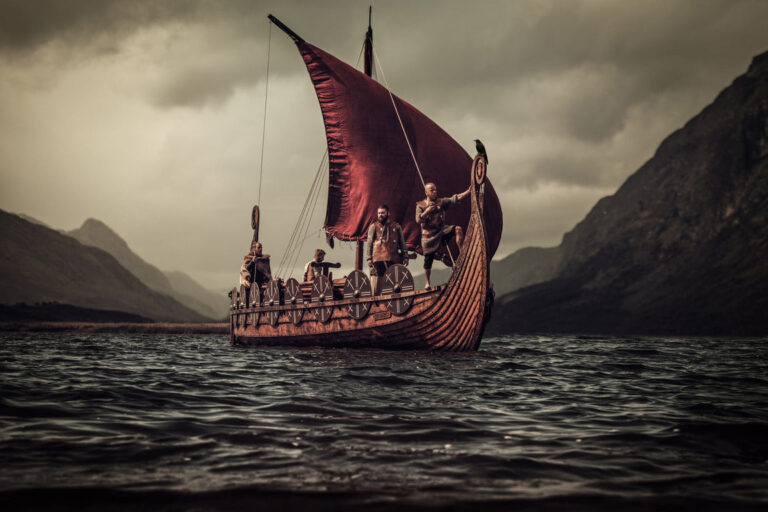
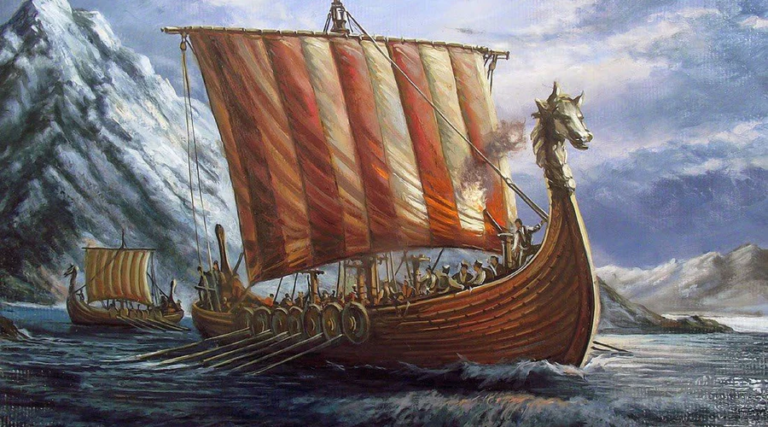
For the Vikings, mythology was not a separate category from daily life. It was woven into law, art, and the names of days (Tuesday is Tyr’s Day, Wednesday is Woden’s Day, Thursday is Thor’s Day, Friday is Freya’s Day). Warriors carved runes — Odin’s gift — onto their weapons and ships. Many modern wearers of Viking rings engraved with runes, Valknut knots, or serpent motifs are participating in a tradition thousands of years old — connecting the present moment to an ancient, living cosmology.
Why Norse Mythology Still Resonates Today
We live in an era of superhero films and fantasy epics, and it is not a coincidence that Norse mythology sits at the heart of so much of it. Marvel’s Thor. Tolkien’s cosmology. Neil Gaiman’s retellings. The enduring popularity of games like God of War. These reflect a genuine, widespread hunger for the values that Norse mythology embodies: courage in the face of impossible odds, wisdom earned through sacrifice, and a fierce joy in life even knowing it ends.
For those who feel this pull, wearing the symbols of Norse mythology is a way of carrying that worldview forward. A Valknut pendant. A Vegvisir compass ring. A bracelet etched with the Elder Futhark. If you want to carry a piece of that tradition with you, explore our collection of Viking pendants — each one crafted with the same care and intention that the Norse smiths brought to their most sacred work.
Frequently Asked Questions About Norse Mythology
Who are the main gods in Norse mythology?
The central figures are Odin (the Allfather, god of wisdom and war), Thor (god of thunder and protector of mankind), Freya (goddess of love, fertility, and war), Loki (the trickster), Tyr (god of justice), Baldr (god of light), and Frigg (goddess of foresight). They are divided into two divine families: the Aesir and the Vanir.
What is Yggdrasil in Norse mythology?
Yggdrasil is the immense cosmic ash tree that connects the Nine Realms of Norse cosmology. Its roots reach into the realms of the dead, the giants, and the well of wisdom. It represents the interconnected nature of all existence and is the axis around which the entire Norse universe revolves.
What is Ragnarok?
Ragnarok is the prophesied end of the current age — a great battle in which most of the gods die, the world is destroyed, and then rises anew. It is cyclical, not purely apocalyptic: after Ragnarok, survivors emerge, a new world grows, and Baldr returns.
Are Norse mythology and Viking religion the same thing?
Largely, yes. Norse mythology refers to the stories and beliefs held by the Norse and other Germanic peoples during the Viking Age (approximately 793–1066 AD). The practice of this religion is sometimes called Asatru or the Old Norse religion. It was largely displaced by Christianity between the 10th and 12th centuries, though many traditions survived in folklore, art, and cultural memory.